I am away from my studio at the moment, so I don’t have my dear markers, my comfortable chair or, in the first place, the silence that I value a lot when I work. I don’t even have a proper sketchbook with me, and for a while this seemed like a good enough reason to leave drawing until I returned home.
Drawing with almost nothing turned out to be interesting in a different way. There is no point thinking about beautiful rendering when you have an ordinary pen and a piece of hotel paper in front of you. Instead, you begin paying more attention to the subject itself. You notice where you want to place it on the page, whether its proportions feel convincing, pay attention to negative space and composition.
Rendering can become quite technical. You learn how to build a shadow, create a particular texture or make a material look convincing. All of that is important, but there is another part of drawing that is harder to describe and perhaps harder to teach. It is the feeling that a shape works, that a line has enough tension, that the composition needs more space on one side or that one small irregularity is exactly what makes the subject interesting.
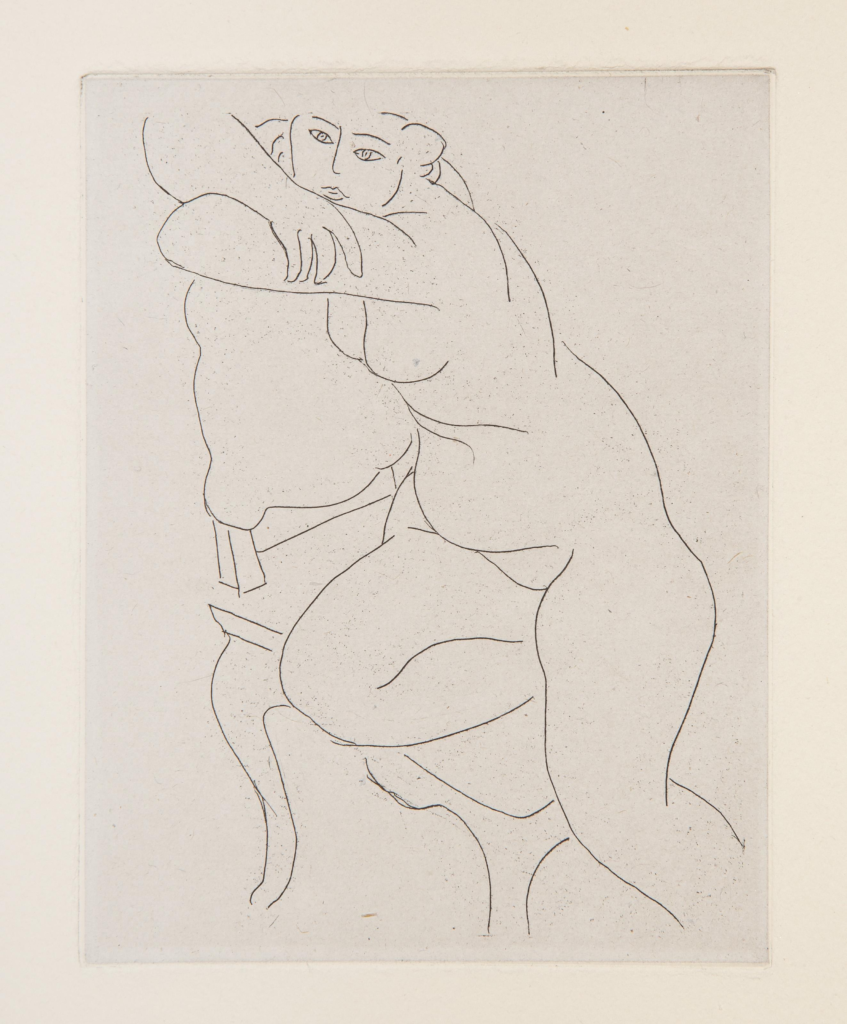
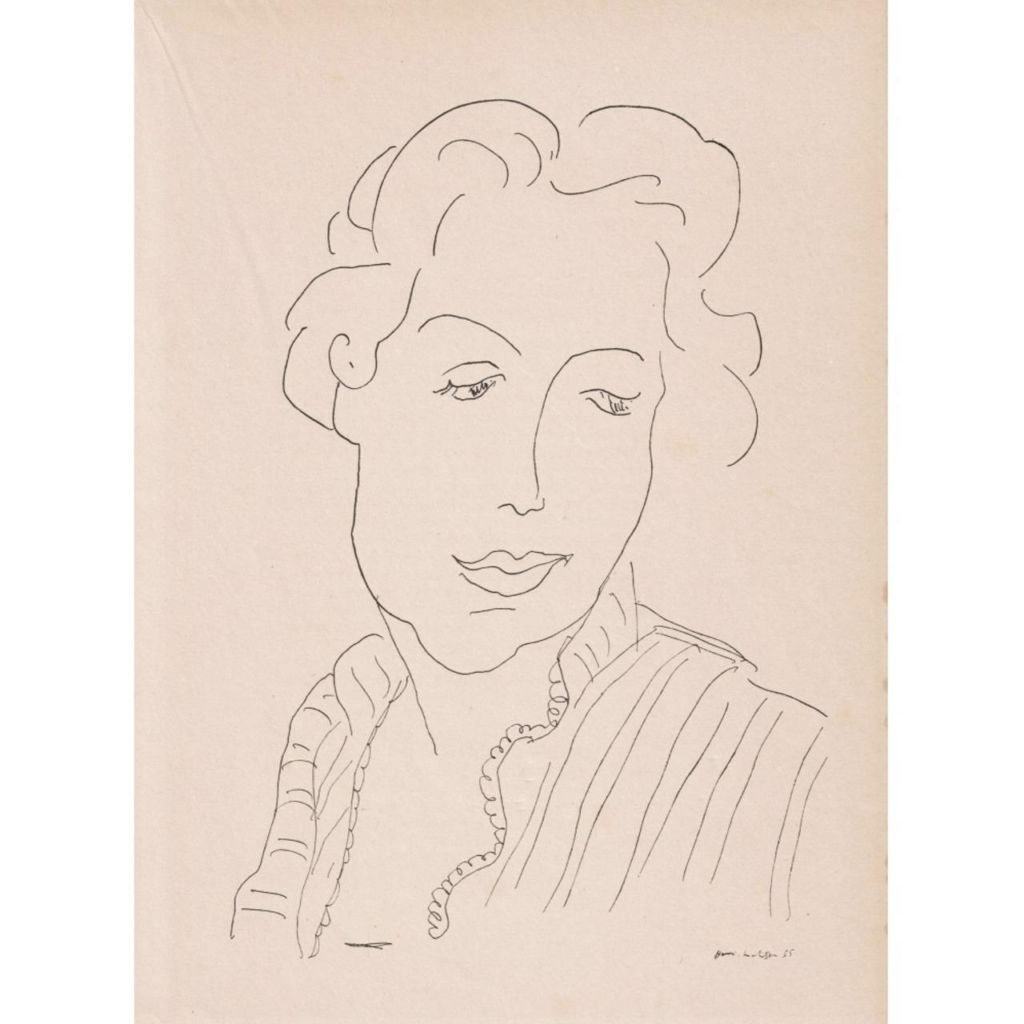
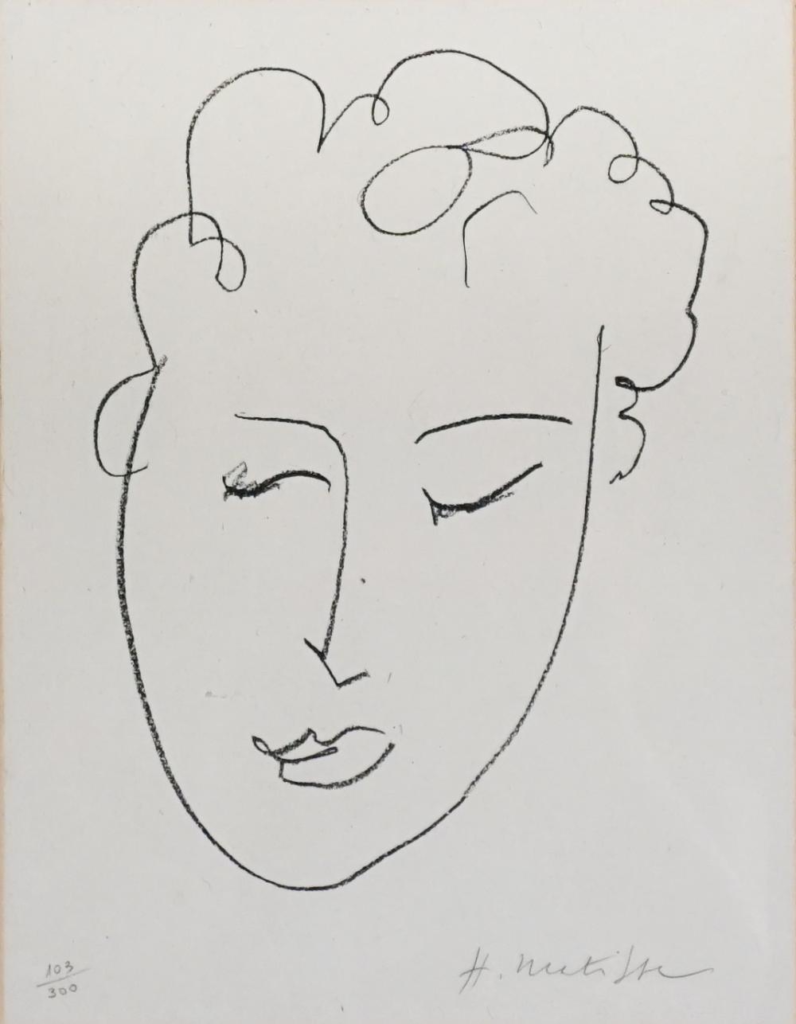
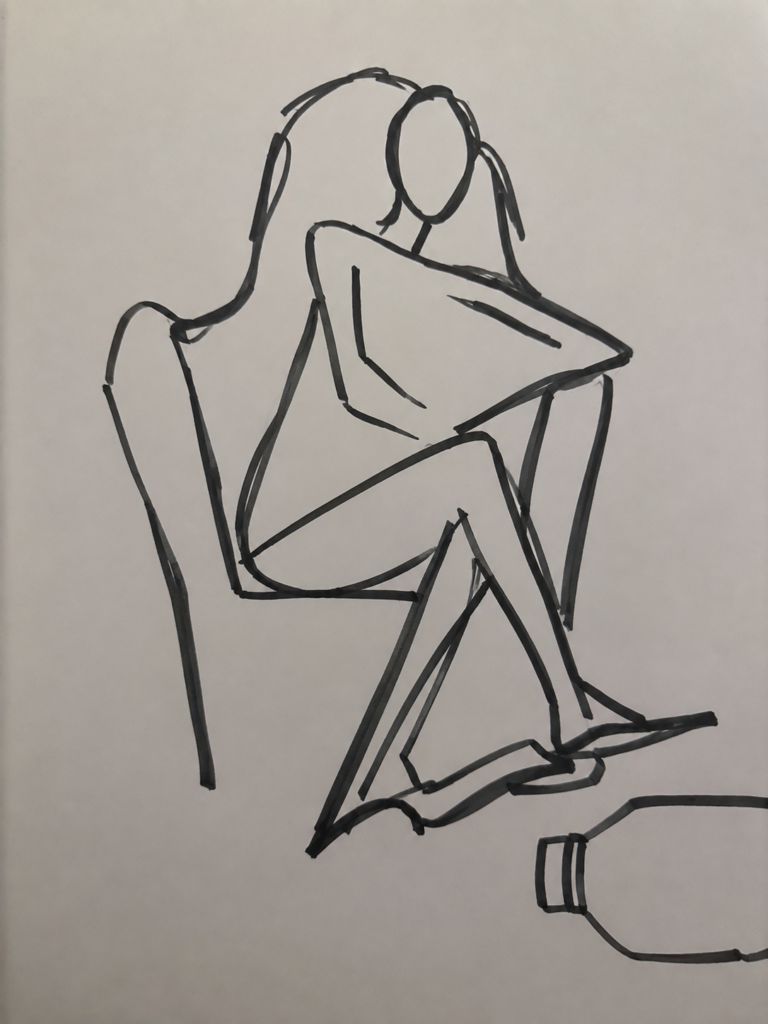
While thinking about what could actually be practiced with such limited means, I kept returning to Matisse’s drawings. I have always loved how little he sometimes needed to describe a body or a face. A few lines could hold the weight of a figure, an expression or the particular character of a pose without explaining every part of it.
Of course, this apparent simplicity came after years of looking and drawing, which is precisely what makes it interesting to me. When most of the technical possibilities are removed, there is nowhere to hide behind beautiful rendering. You have to notice the shape, decide which line matters and feel whether the composition works. These are small decisions, but together they train the part of drawing that is difficult to explain through technique alone.
So while these are not Matisse’s exercises, I decided to let his drawings accompany some of them. Not as something to copy, but as a reminder of how much a line can do when the eye behind it has learned what to look for. They are small exercises in looking and making decisions. You need a piece of paper, a pen or pencil, and whatever happens to be around you.
1. Draw without lifting the pen
Choose something ordinary that happens to be around you: a pair of sunglasses, your shoe, a chair across the room or a bag left on the table. Put your pen down and begin following the object’s edge, and once you start, don’t lift the pen until the drawing is finished.
The result will probably be strange, and that’s perfectly fine. The point is not to make a beautiful contour drawing but to slow your eye down enough to follow what is actually there.
We carry simplified versions of familiar objects in our heads. Ask someone to draw a cup and a familiar symbol usually appears, while the cup sitting in front of you is unlikely to look exactly like that. Its proportions change depending on where you are sitting, part of the handle may disappear from view, and the outline may be quite different from the one you expected to find.
A continuous line gives you fewer opportunities to correct the drawing or make it prettier. Instead, you have to keep looking and allow your hand to follow what your eye discovers. Gradually, the exercise shifts your attention away from your idea of an object and towards the particular object that is actually in front of you.
WORTH KNOWING
Matisse experimented with drawing the human figure in an almost continuous line while keeping his eyes on the model rather than on the paper. The resulting bodies could become distorted, but accuracy was not the only thing being trained. By allowing the eye to lead and the hand to follow, he could concentrate on the movement and character of the figure without interrupting the process to correct every line.
2. Look longer than you draw
Choose a subject and resist the impulse to draw it immediately. Spend thirty seconds simply looking at it and notice where it is widest, how its direction changes, which parts sit higher or lower than you expected and where one shape disappears behind another.
When you begin drawing, keep returning your eyes to the subject every few seconds. Try to spend more time looking at what you are drawing than at the drawing itself.
Once something promising begins to appear on paper, it is very easy to become absorbed in it. We start responding to the marks we have already made instead of checking them against the subject, and little by little we may end up drawing our own drawing rather than what is actually there.
This exercise builds the habit of returning to the source of the information. With time, looking becomes more active: you begin noticing relationships between shapes, subtle differences in proportion and small irregularities that you might previously have passed over.
3. Draw what isn’t there
A chair is particularly good for this exercise because there is almost as much empty space in it as there is chair. Instead of concentrating on the legs, look at the shapes created between them. Instead of drawing the backrest, notice the pieces of wall that you can see through it and try drawing those shapes instead.
You can do the same thing with a person. Look at the space between an arm and the torso, the opening between the legs or the shape that appears between the waist and a bent elbow. These empty areas are surprisingly useful because they allow you to judge proportion without becoming distracted by the complexity of the figure itself.
If the space between the arm and the body is wrong, something about the pose will usually feel wrong too, even if you have carefully drawn the hands, clothes and facial features.
Negative space also changes the way you think about composition. You begin to see that an object doesn’t exist independently on a page; the empty space around it has a shape of its own and affects how the whole drawing feels. Sometimes understanding what surrounds an object helps you see the object itself more clearly.
4. Five lines
Choose something relatively complicated and give yourself only five lines to describe it. It could be someone sitting at another table, a coat hanging over the back of a chair, a tree outside your window or a building across the street.
Five lines are not enough to explain everything, so you have to decide what matters. Perhaps the slope of someone’s shoulders carries more information than their shoes. One curve might describe the weight of a coat better than ten smaller lines, while the character of a building might live in an unusual roofline that you would barely notice if you were trying to draw every window.
This is an exercise in selection, and I think selection is an important part of developing an artistic eye. Drawing is often associated with our ability to add more information through detail, anatomy, texture or rendering, while knowing what can be left out requires another kind of judgment.
When there are only five lines available, you begin asking which ones carry the character of what you are looking at. Finding those lines is much more interesting than simply making the drawing more detailed.
A Matisse portrait can contain extraordinarily little information and nevertheless feel like a particular person rather than a generic face. Instead of asking how accurately can I reproduce this face?, the exercise asks what do I actually need to keep?
5. Draw what you remember
Look at something for about a minute and then turn away from it before you begin drawing. When you are finished, look at the subject again and compare what is there with what you remembered.
You may discover that you remembered the general silhouette but completely changed the proportions, or that an unusual curve stayed very clearly in your mind while something much larger disappeared. Sometimes a seemingly insignificant detail survives with surprising accuracy simply because there was something about it that caught your attention.
Now draw the subject once again while looking at it and place the two drawings beside each other. I wouldn’t think of the first drawing simply as a worse version of the second. It is also a small record of what your eye considered important enough to keep.
This becomes particularly interesting when you repeat the exercise over time. You start learning something about your own visual attention: which qualities you notice immediately, which ones you tend to exaggerate and which parts of a subject your mind quietly simplifies. For an artist, becoming aware of those tendencies can be as useful as learning another rendering technique.
6. Collect silhouettes
If you are somewhere with people passing by, fill a page with quick silhouettes and give yourself perhaps twenty or thirty seconds for each person. There is no need to draw faces, hands or careful anatomy because the purpose is to understand the larger shape and the way the body occupies space.
If you are interested in fashion, this becomes especially useful. Pay attention to where the body ends and the clothes begin, and notice how dramatically clothing can alter the proportions we perceive. A jacket can change the apparent width of the shoulders, a high waist can make the legs seem much longer, while an oversized shirt can turn the torso into an almost geometric shape.
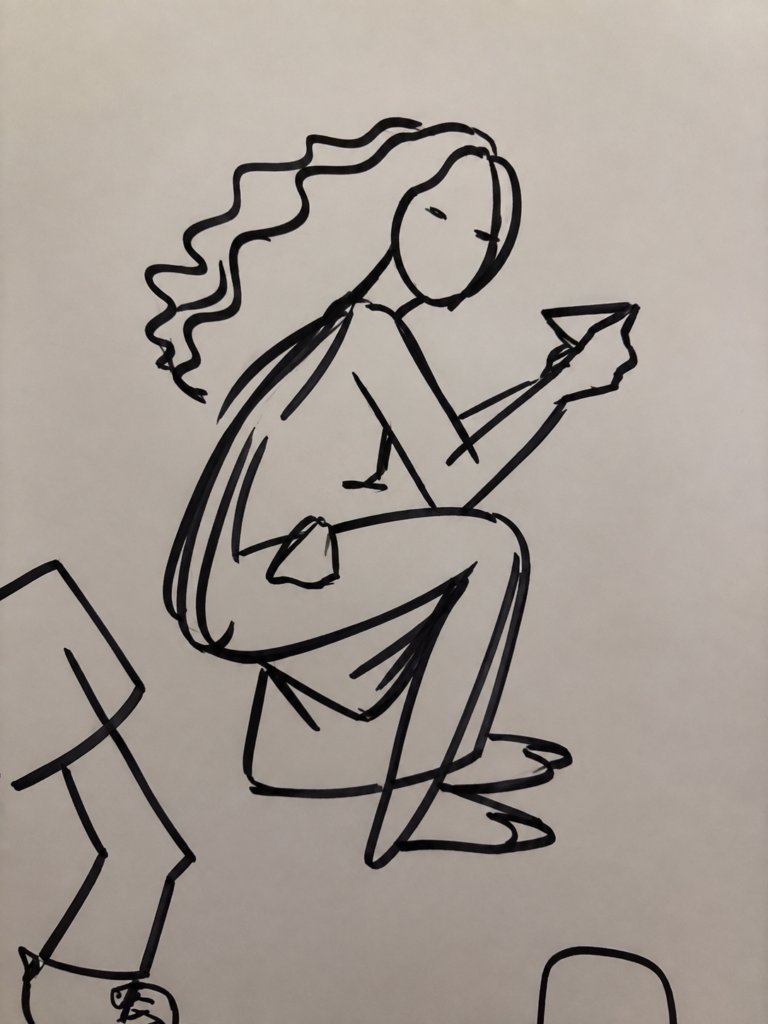
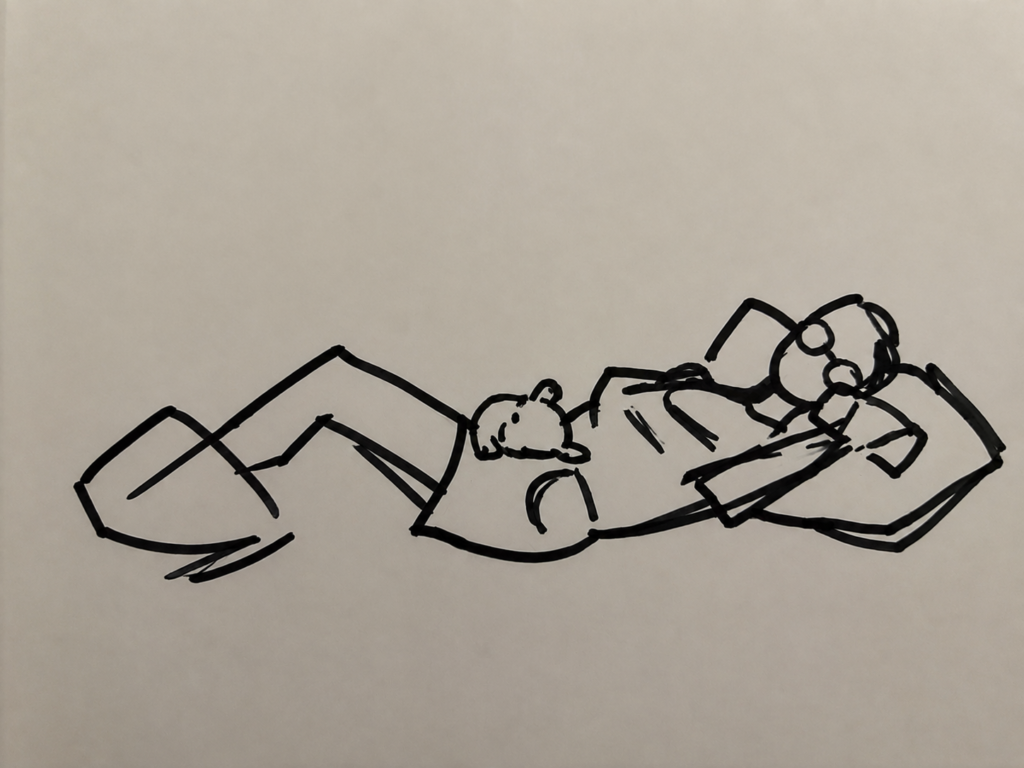
Silhouettes collected in a hotel lobby
Try to notice posture as well. Someone leaning towards a child creates a completely different silhouette from someone waiting with their weight resting on one leg, even if they happen to be wearing similar clothes.
I wouldn’t try to turn these people into fashion illustrations. The page can simply become a collection of observations, with each little figure recording something you found interesting about proportion, gesture, clothing or shape. After twenty of them, the variety itself becomes useful.
Paper is enough
I love good drawing materials and I certainly don’t want to give them up. There is pleasure in finding exactly the right pencil, working with beautiful markers or having all the possibilities of digital drawing available.
At the same time, sophisticated tools can sometimes pull our attention towards the technical side of making an image. We begin thinking about layers, colours, rendering, brushes and corrections, and there is always another small area that could be polished.
With a simple pen and paper, much of that disappears. There is more room to think about whether the shape feels right, whether the proportions are convincing, how the subject sits within the page and which lines actually contribute something to the drawing. These decisions are difficult to reduce to a formula because they depend partly on visual judgment and intuition, and I think those artistic senses need practice just as much as technique does.
There is also freedom in making drawings that have no ambition to become finished work. They can be awkward, inaccurate or unfinished, and they can remain inside a notebook without ever becoming something to show. Their value can simply be in what you noticed while making them.
Perhaps that is what I like most about drawing this way while being away from the studio. You can continue training your eye wherever you happen to be, and an ordinary piece of paper and something that leaves a line are enough to begin.